ARCHERY FOR YOUTH · OUTDOOR PRACTICE

Move the body.
Still the mind.
Focus. Posture.
A habit that lasts.

This is not a specialist or elite track by default. Outdoor practice is a defining part of how we train—supporting body awareness, healthy visual habits, and focus as a calm break from school. Interest comes first; more advanced pathways can come later if they make sense.

Posture Better posture
Looking farther Distance focus · natural light
Deep focus Quiet breath → classroom calm
Lifelong Campus clubs · lasting sport
01 · PHYSICAL & MENTAL BENEFITS

What changes: body & mind—rectitude, grit, and health

Compared with many high-impact or contact sports, archery is low-to-moderate impact; with proper coaching and safety safeguards, it can become a sport well suited to long-term practice.

🦴

01 · Posture awareness

It can help children become more aware of posture and back engagement. It is not a treatment for kyphosis or other medical conditions.

👁️

02 · Healthy visual habits
& distance focus

Looking toward outdoor and distant targets encourages regular distance viewing and time away from close-up screens. It is not a way to prevent myopia or replace professional eye care.

🎯

03 · Deep focus

In the seconds of a shot, stray thoughts must go. That habit of gathering attention may also help children settle into focus more easily when listening in class or working independently.

🍃

04 · Reading the outdoors

Read breeze, moving grass, and shifting light—turn outdoor complexity into small adjustments. Insight and acuity grow with every shot.

🧘

05 · Calm & stress release

Archery gives children a chance to slow their breathing, regulate emotions, and release some of the pressure of the school day.

🛡️

06 · Grit & resilience

Miss without blaming the world—face failure, self-correct, and act again. Settle in solitude, and grow tougher through sport.

⚡

07 · Decisive action

Aim, hold, release.
That process can help children practice making decisions and committing to an action.

🏛️

08 · Quiet confidence

In an anxious, comparing world,
give a child a small space they fully command—order and quiet confidence from within.

02 · OUTDOOR PRACTICE

Outdoors: grow under open sky

Beyond a standard range, outdoor archery offers another way to meet nature: grass, forest, sun, and clean wind—
adding observation and adaptation to practice.

☀️

Sun, breeze & long sightlines

Outdoor ranges give wide visual space. Light and breeze change how you read the target; long arcs invite young archers to look up from books and screens—more like everyday healthy visual habits than a medical eye-care promise.

🧠

A simple loop: observe — judge — adjust — act

On the shooting line, children learn a simple loop: observe wind and flags → judge drift → adjust form → execute the shot. That way of thinking can serve them well beyond the range.

03 · OUR APPROACH

Love the craft first—pathways optional

No push into sports schools or pro tracks. Treat it as a joyful long habit; mind–body and school-day benefits already matter most. If skill and interest grow, wider directions can stay optional later—never the default goal.

🌱

Stay in normal school life

No closed high-intensity camps—1–2 hours a week is enough. It should fit around school, not compete with it. It can be a healthy reset alongside academic work.

🤝

Compete as play, widen the view

Events are not only about medals or beating someone. They are also opportunities to visit new places, meet peers, and experience the joy and discipline of sport.

🎒

Pathways when
they’re ready

Most children do not need rankings or an elite track. As interest and ability grow, lasting sport experience can become part of a child’s growth story. How that experience is understood and used is for the child and family to decide.

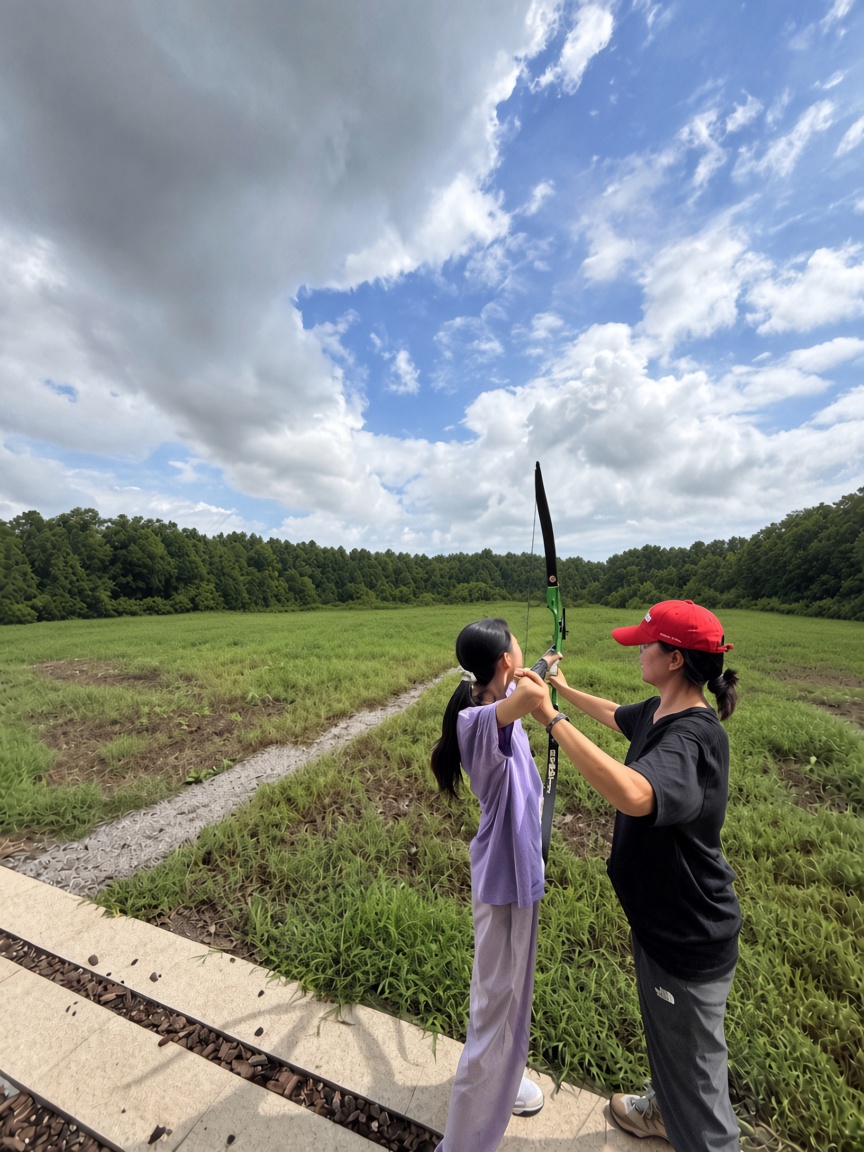
A coach guiding a student on an outdoor archery range
A real session: coaching posture and form on the range
COACHING

Structured coaching · shared standards

On site, you are guided by coaches experienced in structured training and competition. Shared safety and technical standards are adapted to age, level, and goals, so the guidance remains clear and consistent.

Your first session: what to expect

04 · GLOBAL JOURNEYS

Travel: a child’s first archery trip abroad

Competition is a window on the world. Around open tournaments we shape youth travel that blends match + outdoor practice + cultural visits.

1

Nearby open tournaments (Korea · Singapore · Malaysia · Indonesia…)

Best entry: friendly, nature-rich ranges

An ideal first international archery trip for youth: South Korea’s archery culture, or nature-resort ranges in Singapore, Malaysia, and Indonesia—friendly peer matches in sea breeze and sun.

2

Further afield (Europe & the Americas)

Share the field with youth worldwide

Step onto storied ranges in Europe and the Americas. On open fields, meet peers from many countries—pure sport culture and fair play.

3

Outdoor practice · culture study trips

Sport, nature, and people

Events as the thread—nature walks, museums, campus visits, and exchange with local clubs—so youth grow a wider horizon through sport.

05 · FUTURE VALUE

Grow first—pathways later if they fit

Archery can support future study and growth—and systems differ widely by country or region.
More important for most children—including those who never pursue a competitive track—it first improves daily habits and how they show up.
Education-related pathways stay optional, never the default goal.

Interest path: lasting gains for school & life

No need to chase athlete ranks or sports schools. Steady weekly practice alone can change classroom and daily life in ways you can see.

📚

School-day rhythm

Once or twice a week is enough—no closed camps. The goal is decompression and a healthy rhythm—not another source of pressure or a conflict with homework.

🎯

Focus that transfers

Practice gathering attention and holding it steadily—skills that may also help with listening and independent work.

🦴

Posture & visual habits

Drawing and opening the back can help children become more aware of posture. Outdoor distant targets and natural light also encourage healthier distance-focus habits. This is not a medical treatment.

🛡️

Grit & quiet confidence

Miss, then look inward—face mistakes, self-correct, and build order that doesn’t depend on rankings.

If pathways and a longer road matter

Sport, events, and a global perspective are optional extensions—not the default goal.
See Sport & Global Journey if you’d like to explore that road.

Explore Sport & Global Journey →

Fall in love with archery first;
pathways can follow

Archery is first a lifelong sport that can grow with a child.
For most children, we weigh daily gains in classroom focus,
body–mind state, and grit.

Note:
Rectitude Archery focuses on archery training, event experience, sport exchange, and athlete development. Overseas education, admissions, visas, and exit–entry procedures should follow official information and institutional requirements. We do not promise admission, scholarships, or any admissions outcome—and we do not provide exit–entry intermediary services. Growth does not depend on admissions policy.
06 · ROADMAP

A calm path: Start → Build → Explore

Clear stages by age. Love the sport first; skill and horizon follow. Education routes stay optional later.

1

Start · spark (ages 6–10)

Core: love archery · posture & safety

Fun first sessions and good habits first—kids’ safe bows, basic stance and release. About once a week: protect joy while building focus and posture awareness.

2

Build · grow (ages 10–14)

Core: form · habits · outdoor practice

Steady practice (1–2× weekly), outdoor distances, club friendlies—focus, emotional regulation, and self-awareness grow with the craft.

3

Explore · widen (ages 14–18)

Core: international horizon · deepen interest

Join domestic and international study trips and open tournaments. Those with interest and ability may prepare ranks or profiles; most keep it as hobby and peer exchange.

4

Beyond · open future (18+)

Core: lifelong habit · many paths

Archery becomes a distinctive mark—campus clubs and lifelong love for most. If interest and ability support it, more structured education or application-related experiences can be explored later. Optional, never the default.

07 · FOR PARENTS & FAQ

Parent guide & FAQ

Four light steps Easy start

  • 1. First session:
    Visit a proper range and see how your child responds to the experience.
  • 2. Choose the right coach:
    Choose a coach who prioritizes safety, properly fitted equipment, and sound technique.
  • 3. Steady rhythm:
    Once a week, fixed cadence—steady company, not a sprint.
  • 4. Joyful events:
    Start with club friendlies; treat matches as family study trips.

Common parent questions FAQ

  • Will drawing imbalance left/right bones? Teaching emphasizes balanced warm-up and symmetric stretch. Coaches match low draw-weight youth bows by age and stress posture awareness for even development—not a guarantee to “correct” skeletal issues.
  • Is it safe? Ranges follow distance and shooting-line rules, with arm guards, finger tabs, and coach supervision. Archery is a non-contact sport with manageable demands when children use properly fitted equipment. No sport is risk-free.
  • Will it affect schoolwork? The aim is to give children a calm, focused break from the school day. Some children find that the calm and focus of practice helps them return to schoolwork more settled.
  • Must we pursue an elite path? No. We do not push children toward sports schools or elite competition. As a lifelong hobby it can last a lifetime; if interest and ability grow, more structured goals can be explored later.

Book a 45-minute family / youth first session

Includes: kids’ gear + a coach-guided first session + a brief conversation about your child’s experience

Book a family first session

See how to join